
How to Price Your Home Bakery Products: Ingredients, Time and Profit
Just adding 30% to your costs usually isn’t enough. Try this formula to price your home-baked cookies, cakes, and hampers for profit, using real Singapore prices.
A lot of home bakers look at what others charge and set their prices that way, only to find that busy weeks don’t bring in much money. The missing piece is often unpaid time and small costs that get left out. This guide walks you through five steps, a cookie pricing example, real Singapore prices for ingredients, power and delivery, and tips for custom orders and price increases.
How to Price Baked Goods in Five Steps
There are just five steps to the whole method. The next sections explain each one.
- Cost the ingredients for one unit. Price each item from your receipts, then divide the batch cost by the number of boxes or pieces it makes.
- Add packaging and labels. Count the box, liner, ribbon, sticker, and any card that goes out with each order.
- Pay yourself for your time. Multiply the minutes spent baking, decorating, and packing by an hourly rate you set.
- Add overhead and fees. Include a share of gas and electricity, equipment wear, wastage, and any payment or delivery fees you carry.
- Divide by 1 minus your margin. Total cost ÷ (1 − margin) gives the selling price. Check it against what other Singapore sellers charge before you publish it.
What Goes Into the Cost of a Baked Good
Ingredient Cost Per Unit
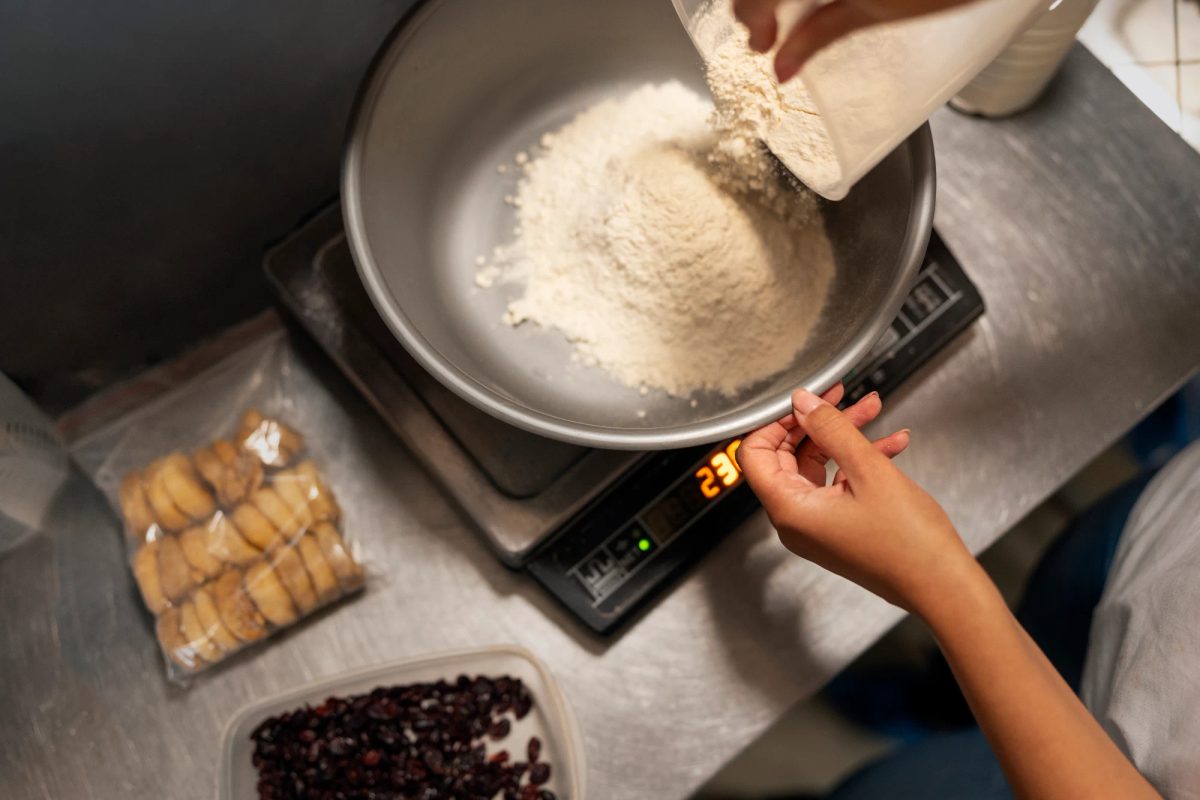
Begin with the cost for a full batch, not just one cookie. Add up the total batch cost, then divide by the number of boxes or pieces you get. Always use regular shelf prices, not special sale prices. Butter is usually the biggest line. FairPrice lists its own unsalted butter at S$4.99 for a 250g block. Eggs are cheaper but move around: mainstream eggs from Singapore and Malaysia cost between S$2.85 and S$4.55 for a tray of 10 at FairPrice. A tray of 30 is on promotion at S$4.95 until 31 December 2026, but a 30-egg tray was listed at S$6.65 earlier this year. Cost your recipes at the normal price and treat the promotion as a bonus; otherwise, your prices will need to jump when the offer ends. Include a small amount for wastage, like test bakes, broken pieces, or a batch that doesn’t rise. A good starting point is 5% of your ingredient cost. For S$6.00 of ingredients, that’s 30 cents.
Packaging and Labels
It’s easy to forget about packaging since you usually buy it in bulk. Divide the total pack price by the number of units. For example, one Singapore seller offers four-compartment cupcake boxes at 10 for S$5 or 50 for S$20, which is 40 to 50 cents per box before adding ribbon, stickers, or a card. Window boxes with printed labels and gift boxes cost even more. If the packaging is part of what the customer is buying, as with a gift set, price it as part of the product.
Your Time and Hourly Rate
Time is the cost home bakers most often forget, which is why many feel busy but don’t make much money. Count every step: shopping, mixing, baking, cooling, decorating, packing, and even replying to messages. There’s no set minimum wage in Singapore, so you can choose your own rate. Pick an amount you’d accept as a part-time wage for this work, and stick with it.
Gas, Electricity, and Equipment
For the oven, work from the tariff. SP Group's regulated household electricity tariff from 1 October to 31 December 2026 is 28.59 cents per kWh before GST, or 31.16 cents with 9% GST. A 2,000-watt oven running for an hour uses 2 kWh, which costs about S$0.62. That is an upper estimate, because ovens cycle on and off once they reach temperature. If you cook on town gas, City Energy's tariff for the same quarter is 21.45 cents per kWh before GST, or 23.38 cents with GST. Tariffs change every quarter. The household rate went up 17% to 31.91 cents from July to September, then dropped 10.4% for October to December. That’s about a 7-cent difference per hour for a 2 kWh oven, so butter and your time affect your costs much more than the power bill. Equipment wear is the other part. Divide what you paid by the number of batches you expect it to last. A S$300 set of trays, tins and tools that will see 600 batches adds 50 cents a batch.
Delivery and Payment Fees
Home bakers in Singapore commonly charge between S$5 and S$15 for delivery, depending on the area and how fast the customer needs it. Courier platforms such as GrabExpress, Lalamove and pandago are priced by distance, and a rider across town can come to S$10 to S$18 once the platform fee and surcharges are added. Ask for the quote first, then pass the delivery cost on as a separate line, or set a free delivery threshold. One Singapore cupcake bakery offers free delivery above S$150, for example. Payment fees are smaller, but they add up. Stripe's published Singapore rates are 3.4% plus S$0.50 for a domestic card payment and 1.3% for PayNow. On a S$25 order,that is S$1.35 by card and about S$0.33 by PayNow. Rates differ between providers, so check yours.
The Cake Pricing Formula
The same formula prices cakes, cookies, cupcakes, and anything else you bake. Divide your total cost by 1 minus the margin you want, where the margin is the share of the selling price you keep as profit. If you are still deciding how much profit each month needs to cover, the targets in this home bakery business plan will tell you which margin to aim for.
How Much Should You Charge for Baked Goods?
Set your price based on your own costs and margin, then check local prices to see how yours compares. Don’t start with the cheapest seller. They might be skipping packaging, using different ingredients, or not paying themselves for their time. Listings change often, and these come from public pages and marketplace posts of different dates, so check current prices before you compare yourself with them. There are three key points from the table. First, prices vary a lot, so customers are used to seeing a range for the same product. Second, higher prices usually go to sellers who offer something special, like a bigger cookie, custom design, or gift packaging. Third, your cost-based price might be higher than some listings. If that happens, try changing what you offer. Adjust the portion size, simplify the packaging, or add something unique.
Home Bakery Pricing for Different Products
The formula stays the same. What changes is which cost dominates, and that decides where to look when a price feels wrong.
Cookies and Small Bakes
Cookies don’t cost much to make, but they take time to finish. Shaping, baking, and packing all add up, so time is usually your highest cost, as shown in the sample table. Sell cookies by the box instead of one at a time, since a box spreads the packaging and delivery cost over several pieces. Set a minimum order that covers your delivery run. Size makes a difference. A regular cookie at around S$2 is at the affordable end, while 120g jumbo cookies sell for S$4.50 to S$6 each. Bigger cookies use more butter and chocolate, but take about the same time to shape and pack, so you can set a higher margin.
Custom and Celebration Cakes
Underpricing custom cakes can really hurt, because decorating takes a lot of time and is easy to overlook. Always charge for your time by the hour, just like you would for any other product. For example, if you are going to sell a decorated 6-inch cake:
| Cost line | Amount (S$) |
|---|---|
| Ingredients | 14.00 |
| Board, box and ribbon | 4.00 |
| Decorations | 6.00 |
| Time (3 hours at S$12 an hour) | 36.00 |
| Overhead | 2.00 |
| Total cost | 62.00 |
| Selling price at a 30% margin (62.00 ÷ 0.70 = 88.57, rounded up) | 89.00 |
The S$89 price sits inside the range that Singapore sellers list for a 6-inch custom cake, which runs from about S$52 to S$95. Most of that gap comes from how much design work goes in. A bare, lightly decorated cake belongs at the low end. A themed cake with hand-piped details does not.
Hampers and Bundles
A hamper includes several products and extra costs, like the basket or box, filler, ribbon, a card, and your time to put it all together. Price each item at cost, add the hamper-specific costs, then use the formula for the total. Avoid giving a big discount for bundles. A small discount of 5% to 10% is enough, since bundles already save you on delivery and payment fees. Hampers also sell best during certain seasons. For example, Hari Raya 2026 hampers from big brands were listed at S$56.80 to S$287, and Christmas hampers at S$49 to S$400. Plan your supply and packaging before the busy season starts.
How to Price Custom Orders and Rush Requests
For custom orders, set a base price and add extra charges for each change, so customers know what each option costs. For example, one Singapore seller lists a 4-inch bento cake at S$30, adds S$20 for a bigger size, S$10 for an extra layer, S$15 for a printed or detailed design,and S$25 for two burnt-away images. The customer chooses what they want, and the quote is built step by step.
Fix the base price from the formula above.
Price each add-on by the extra ingredients and time it needs, not by what it looks like it should cost.
Lead time helps protect your price
In Singapore, sellers usually ask for notice that matches the job: three days for a simple cake or cupcakes, ten days or more for a decorated cake, and two to three weeks for detailed cakes. If someone asks for an order sooner than your usual lead time, it’s a rush order and costs you more. You might need to buy ingredients specially, rearrange other orders, or work late.
Be sure to charge for this extra effort
A flat rush fee of about 20% of the order value is a good place to start. For example, S$89 cake becomes S$106.80 if it’s needed in a day. Let customers know the fee before you accept the order, and always apply it the same way. If you can’t fit the request in without affecting other orders, it’s okay to say no. Two habits will help keep custom work profitable:
- Take a deposit when the order is confirmed, often half the total, so the slot you hold is paid for.
- Put the scope in writing, including the design reference, the number of changes included and the collection or delivery time. Extra changes after that are charged as add-ons.
When and How to Raise Your Prices
Raise your prices when your costs increase, not just because you feel unsure about asking. Watch for three signs: your cost sheet is over three months old, the price of something like butter, chocolate, or packaging has gone up, or you’re fully booked for weeks and rarely lose orders due to price. Base your price on your actual costs, not guesses. Since your margin is a percentage of the selling price, a cost increase means your price needs to go up by even more. For example, if the cost for a cookie box goes from S$17.50 to S$18.50, at a 30% margin, the price should rise from S$25.00 to about S$26.43. That means S$1.43 increase,not just S$1.00. You can round it to S$26.50. Check your prices regularly so any increases stay small. Because tariffs change every quarter and supermarket promotions can end suddenly, review your costs every three months. Start with your best-selling items. When you raise a price:
- Give notice. Two weeks is enough for regular customers, and orders already confirmed keep the old price.
- Change one or two products at a time, not the whole menu.
- Give a clear reason for the price increase, such as higher butter or packaging costs, and keep it simple. You don’t need to apologise for charging what your work is worth.
- Watch your orders in the weeks after a price change. It’s usually better to have fewer orders with a good profit margin than many orders with little profit.
Common Pricing Mistakes
- Not including your time is a common mistake. If your price only covers ingredients and packaging, your profit is really just your unpaid hours. Always pay yourself for every hour, including decorating and packing.
- Confusing markup with margin. If you add 30% to a sample cost of S$17.50,you get S$22.75, which leaves S$5.25,or about 23% ofthe price.Dividing by 0.70 gives S$25.00 and a true 30% margin.
- Copying the lowest-priced seller is risky. Their costs, portion sizes, and time might be different from yours. Use local prices to check your price, but don’t use them as your starting point.
- Using promotion prices for your ingredients. Sale prices don’t last, so always use the regular shelf price when costing your recipes.
- Forgetting about fees and delivery. Card fees, courier charges, and wastage are real costs. Either add them to your price or include them in your overhead.
- Setting your price once and never updating it is a mistake. A price that worked in January might be too low by June. Review your costs every three months.
- Giving discounts by default can hurt your profit. Every discount reduces what you earn. If a customer asks for a deal, offer a small bundle or a larger order size instead of lowering your unit price.
FAQs
What is a reasonable profit margin for baked goods?
A margin of 30% is a workable starting point once your own hourly rate is already in the cost. Aim higher, towards 40% or 50%, for custom orders and small batches, where admin and messaging time add up. Your margin should also cover the months when orders are slow, so do not set it by what feels comfortable on one order.
Should I price per piece or per box?
Price per box, and show the price per piece so customers can compare. A box carries one pack of packaging and one delivery stop across several pieces. If you also sell single items at a market, give them their own small packaging cost and a slightly higher price per piece than the box rate; otherwise, a single sale earns less than the same item sold in a box.
What if ingredient prices go up?
Update your cost sheet first, then recalculate with the formula. Because the margin is a share of the price, you need to raise the price by more than the cost went up. A S$1.00 rise in cost needs about S$1.43 on the price at a 30% margin. Make small increases, give customers notice, and keep confirmed orders at the agreed price.
Latest articles
Start selling online today
Set up your shop in minutes, share one link and take orders straight away.
Create your shop